
The Beginner's Guide to Essential Oils
Every Yougi scent is built from essential oils and nothing else, so this is the place to start if you want to know what you are smelling. Twelve oils, the four families they fall into, how to tell a good bottle from a bad one, and where each oil turns up in the range.
What an essential oil is
An essential oil is the scent of a plant, taken out of it. Petals, leaves, bark, resin or peel are steam-distilled or cold-pressed until the aromatic part is all that is left. It is concentrated: a small bottle of lavender oil is a field's worth of lavender. A synthetic fragrance oil is built in a laboratory to imitate a smell. It can be very good at that. It is not the plant.
Smell goes straight to memory and feeling, faster than thought. That is why a scent can put you in a room you have not stood in for twenty years, and why the right oil in the right room does something within a few breaths. Every ingredient Yougi uses is written up, by name, in the Oil Library.
The four families
Floral. Lavender, rose geranium, ylang ylang, chamomile. These are the oils that settle a room.
Citrus. Bergamot, sweet orange, lemongrass, may chang. Bright, quick, and gone first. They lift.
Woody and resinous. Cedarwood, sandalwood, frankincense, patchouli. They sit underneath everything else and stay the longest. They ground.
Herbal. Eucalyptus, peppermint, rosemary, basil. Clean and clearing. They open the breath and clear the head.
Twelve oils worth knowing
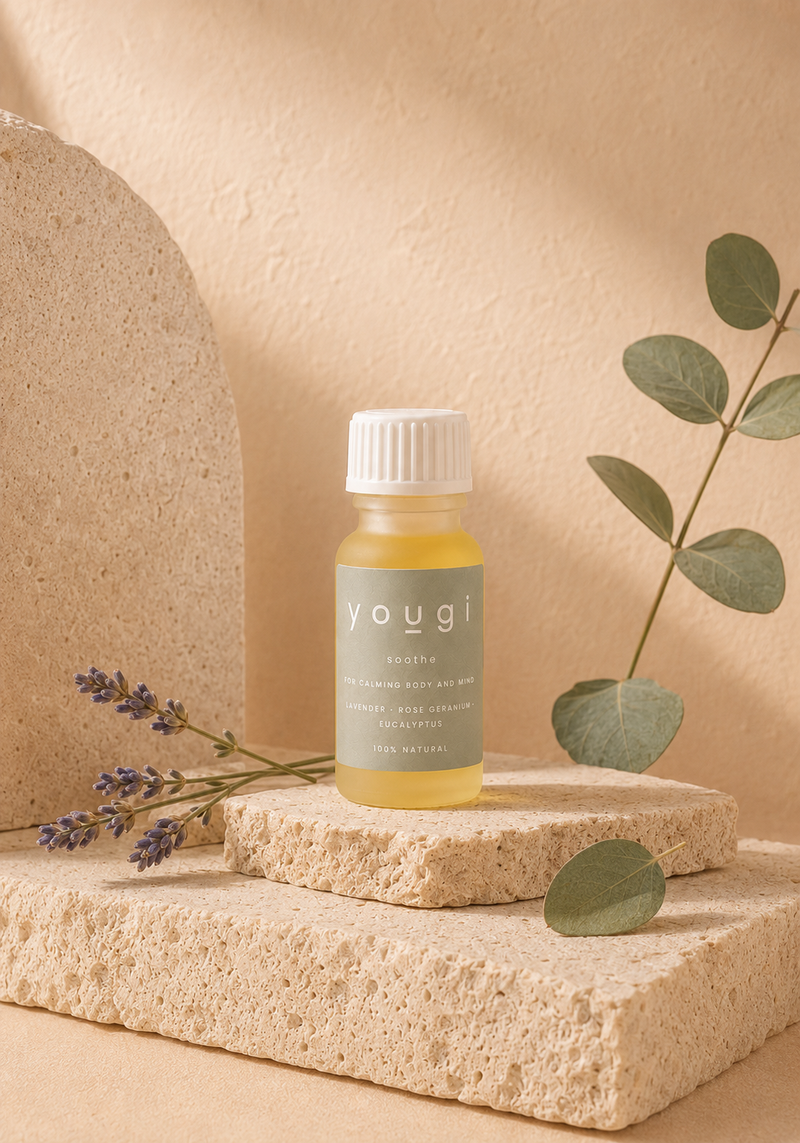
Lavender. If you buy one oil, buy this. Soft, clean, and it goes with almost everything. The shoulders drop. In the range: Soothe.
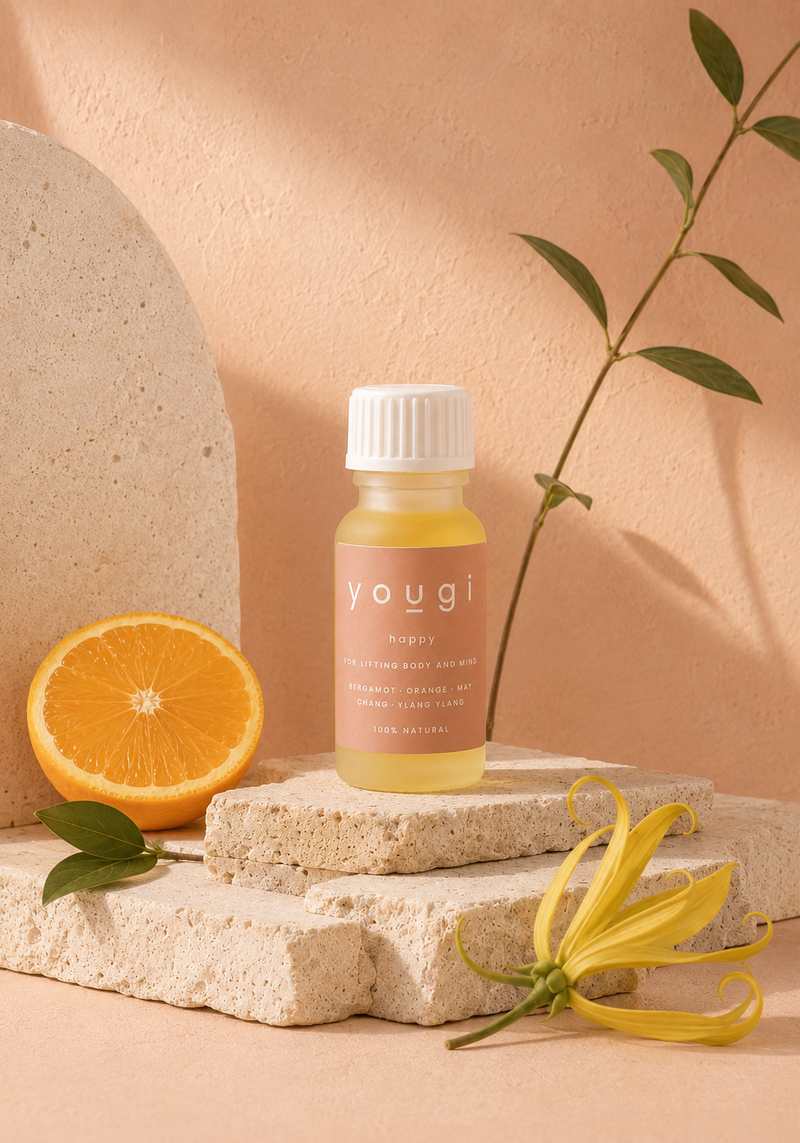
Bergamot. A citrus that calms as much as it lifts. Pressed from the peel of the bergamot orange. In the range: Happy and Soothe.
Eucalyptus. The one for a stuffy room and a heavy head. A little goes a long way. In the range: Soothe.
Sweet orange. Warm, sweet, impossible to dislike. The kitchen oil. In the range: Happy.
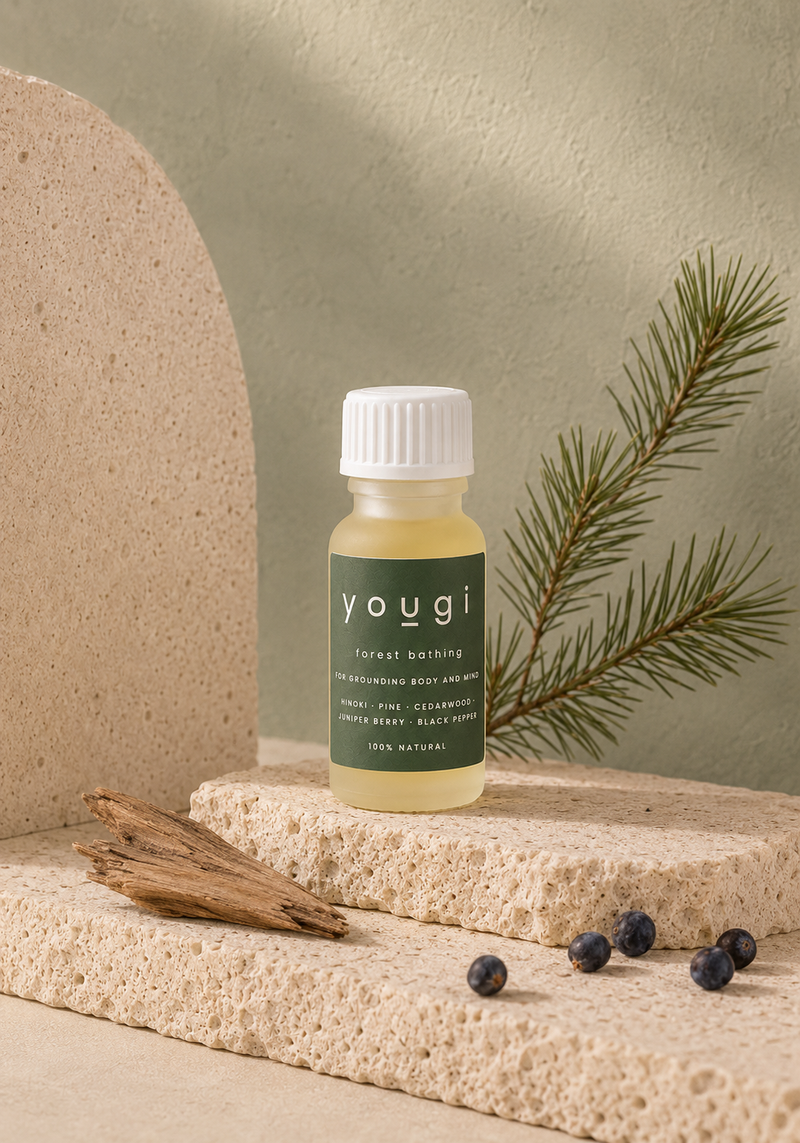
Cedarwood. A dry, warm wood that holds a blend together and stays in the room for hours. In the range: Forest Bathing.
Hinoki. Japanese cypress, the smell of a wooden bathhouse. Cool, green and quiet. In the range: Forest Bathing.
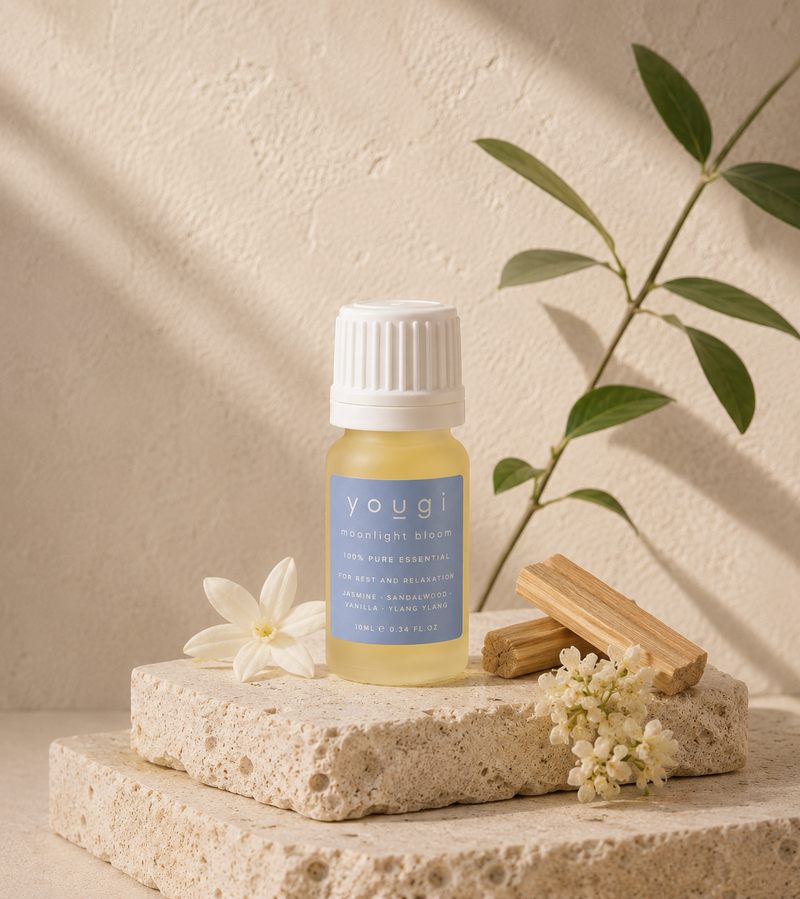
Ylang ylang. A heady tropical flower, rich and slightly sweet. Best in small amounts, with citrus. In the range: Happy and Moonlight Bloom.
Frankincense. Resin from the Boswellia tree, one of the oldest scents people have burned. Slows the breath. In the range: Manifest.
Rose geranium. Smells of rose, costs a fraction of it, and improves nearly any blend it is put in. In the range: Soothe and New Romantic.
Damask rose. The real thing. Thousands of petals to a few drops, which is why it is dear. In the range: New Romantic.
Jasmine. The flower that only gives up its scent after dark. Full, warm, and best late in the day. In the range: Moonlight Bloom.
Basil. Green and just-cut, the smell of a glasshouse at first light. Clears the head. In the range: Apothecary Garden.
How to tell a good bottle
Look for the Latin name on the label: Lavandula angustifolia, not just lavender. Look for how it was made: steam-distilled or cold-pressed. If a label says fragrance oil or perfume oil, it is synthetic. If every oil on a shelf costs the same, be careful, because rose should cost many times what lemongrass does. And a good oil comes in amber, blue or frosted glass, never clear plastic.
Using them safely
Never put an undiluted oil on the skin: mix it into a carrier oil first, such as jojoba or sweet almond. Keep oils away from the eyes. Some oils are best avoided in pregnancy and around small children, so ask a qualified aromatherapist if you are unsure. Cats in particular do not like many essential oils, so keep the room ventilated and the door open. Store bottles sealed, cool and out of the sun; most keep for one to three years.
Where to start
You do not need twelve bottles. One candle, lit for an hour with the door shut, will tell you most of what you need to know about how you like a room to smell. If you want to work with the oils yourself, the candle-making kit is the way in, and the workshops at Connaught Street and Fashion Street are the way in with someone beside you. Not sure which blend is yours? The scent quiz takes two minutes.